Showing posts with label Carbs. Show all posts

Tuesday, December 9, 2025

A LITTLE BIT OF EGGNOG FACTS

It's that time of the year when the eggnog comes out. If you are dieting or you are a diabetic, you might want to watch your eggnog consumption or be sure to read the labels. Some traditional eggnog from the grocery stores contains as much as 30 g of fat and 40 g of carbs per 1/2 cup.

I have a recipe on my diabetic enjoying food blog that has only 3 g fat (1 1/2g saturated) and only 11 g carbs.

If you add alcohol, that increases the number so keep that in mind.

file photo.

Wednesday, December 3, 2025

COMPLEX CARBS TO BOOST YOUR MOOD

Feeling down or depressed? Eat more whole grains, fruits, vegetables, and legumes. Yes, these are carbohydrate foods but they are the complex (or good) carbs. These carbs boost your serotonin levels. Serotonin is a mood-elevating chemical in the brain.

file photo

Friday, November 14, 2025

DIABETICS AND DIET

The best weapon in your arsenal to fight your blood sugar and maintain weight control is a healthy diet. I talk to people all the time who say, "But I eat healthy." That may be true, but do they eat 'diabetic healthy'? There is a difference. If you have been diagnosed with diabetes it is as important to know how to combine the foods you eat as it is to eat something 'healthy'. No matter what you eat, be sure your protein to carb ratio is good. Over the course of a meal, you should be getting a ratio of at least 1/3 as many proteins as carbs (even healthy carbs).  And be sure to include fiber!

Here is an example:
I have people say, "I had a healthy meal of spaghetti and a salad. I even left off the garlic bread." Okay, let's look at that and assume we are talking about a traditional spaghetti meal. Was that a whole-grain pasta? If not, your blood sugar will go up. Did you use a sugar-free sauce? The amount of sugar in pasta sauces varies greatly. A small amount of lean ground beef or meatballs in the sauce is also helpful for added protein. What kind of salad did you have? It should consist of mixed greens, a sprinkling of kidney or garbanzo beans, and some nuts or seeds. You should go easy on the dressing, and it should be sugar free. If you eat this same meal with regular pasta, your sauce has sugar, you have things you shouldn't on the salad and the dressing has sugar, you have not eaten a diabetic healthy meal.  You can also see from this example why it is important to be careful when eating out. You can almost be guaranteed that if you eat that meal in a restaurant it will not be made with whole-grain pasta or sugar-free sauce. 

The next time you sit down to enjoy a meal really look at what you are eating. Look at each item and ask yourself if you are meeting 'diabetic healthy' guidelines.


Wednesday, September 24, 2025

WHAT ARE CARBS?

We hear so much about carbs, especially if you are diabetic, but do you really know what a carb is?

First of all, carb/s is a shortened term for carbohydrates.  Okay, so, what is a carbohydrate? A carbohydrate, along with protein and fat, is one of the 3 macronutrients supplying our bodies with the calories they need to function.  That's right; our bodies must have calories to function properly.  Simply put, carbohydrate foods are the sugars and starches.  So, fruits, vegetables, grains, potatoes, etc are carb foods.  Many foods, milk for example, contain all 3 of the macronutrients of carbs, fat, and protein.

Diabetics are told to watch their carbs and to avoid refined carbs. When you eat foods high in poor quality carbs, such as refined sugar, bleached white flour, white bread, etc, they can raise your blood sugar.  This may cause your insulin to spike to higher-than-normal levels.  Over time, excessive sugar in the blood can be damaging to the body leading to obesity, diabetes, and cardiovascular disease.  Pictured below are some examples of healthy carbs.

file photo

Tuesday, May 6, 2025

WOMEN AND CARBS

Studies show that women who eat diets high in the 'wrong' carbohydrates (white bread, crackers, soda pop and white rice for examples) have double the risk of heart disease than the women who only eat them occasionally.  That is not a good thing!  If you are guilty, promise yourself to change your dietary habits immediately.  Start out with small changes such as no longer buying white bread or white rice.  Only purchase whole-grain breads and start using brown rice.  It is easy to switch to white whole-wheat bread as the change isn't as drastic. This bread is just made with white wheat rather than the red wheat which is bleached to produce "regular" white bread. Add more lean protein to your diet and start out by replacing one soda pop a day with a glass of water.  It really isn't hard to make these potentially life-saving changes to what you eat on a regular basis.  Remember, these changes could save your life later.

Note:  While the studies I looked at were only done with women, it is much better for men and children to make these changes, too. So why not make these changes for the whole family?

file photo

Tuesday, March 4, 2025

#6 HEALTHIEST FRUITS - AVOCADOS

 Continuing our list of the healthiest fruits compiled by scientist and found in a health journal I picked up in my oncologist's office. I don't know if you consider avocado a fruit or a vegetable, but it is categorized as fruit. Without further ado from me, below is the quote from the health journal.

"Avocados are unique fruits that are high in heart-healthy fats and fiber and low in carbohydrates. Half an avocado provides nearly 7 grams of filling fiber and just 8.5 grams of carbs, making it a smart choice for those on low-carb diets. The fruit's monounsaturated fats have been shown to help promote healthy blood lipid levels, and they contain significand amounts of vitamin C, vitamin E, folate, and magnesium. Studies suggest that eating avocados supports blood sugar regulation, weight management, and heart health."

file photo


Thursday, January 23, 2025

EAT YOUR LENTILS!

Lentils are such a healthy food and especially important for diabetics. If lentils are not a regular part of your diet, consider adding them. Even if you don't especially like them, throw a few into soups or onto salads to work them into your diet.

Lentils are loaded with fiber and with protein, both essential to a healthy diet. Some people shy away from lentils because they consider them too high in carbs. The good news is that around 40% of the carbs in lentils are fiber! And that causes a lower blood sugar response thus the reason lentils are important to a diabetic's diet.

According to the USDA (United States Department of Agriculture) one serving of lentils contains 15 grams of fiber and almost 18 grams of protein!

Note: Red lentils are quicker cooking, if you are impatient or in a hurry!

Note: This information is from Jill Weisenberger, RDN, CDE.

file photo

Monday, January 13, 2025

FOODS (CARBS) HIGHEST IN RESISTANT STARCH

A couple days ago I mentioned some of the foods that are high in Resistant Starch (RS). Below is a list of some of the foods highest in RS. Try to eat some RS foods at every meal when possible or at least a couple meals a day.

This list starts with the foods highest in RS and goes down accordingly.

  • Bananas (note: buy your bananas as green as you can eat them for the most RS. A mostly green banana medium-size, approximately 7 to 8-inches, has 12.5 grams of RS while a ripe banana of the same size has 4.7 grams.) Can't stand greenish bananas? That's okay. The ripe banana still has more RS than other foods.
  • Oatmeal ( 1/2 cup uncooked, toasted, comes in right under the ripe banana with 4.6 grams)
  • White beans, (1/2 cup has 3.8 grams - the highest of all the beans)
  • Lentils (1/2 cup has 3.4 grams)
  • Potatoes (Surprised? Yes, one small cooked potato has 3.2 grams!)
  • Garbanzo beans (1/2 cup has 2.1 grams)
  • Whole-wheat pasta (1 cup cooked has 2.0 grams)
  • Brown rice (1/2 cup cooked has 1.7 grams)
  • Pumpernickel bread (1-oz slice has 1.3 grams)
This is a very small list of RS foods. But you have probably gotten the idea that some of the carbs you are afraid to eat are actually what you should be eating. As with any food, you should not go overboard but you should include resistant starch foods in your daily diet.

File photo

Sunday, December 29, 2024

SHOULD DIABETICS EAT WHITE BEANS?

I often have people react with shock when I mention that beans are a staple in my diabetic diet. "Beans", the misinformed often say, "you can't eat beans, they are carbs." They are more than carbs! Take white beans, for instance. They are rich in fiber and protein, two of the things that make them slow to digest and help curb blood sugar spikes. Beans have been in my diabetic meal arsenal for about 14 years now and are one of my best blood sugar spike fighters.

You don't have to cook your own white beans from dried beans. Keep some reduced-sodium canned cannellini beans in your pantry. Rinse and use in recipes and salads. 

file phto


Thursday, December 26, 2024

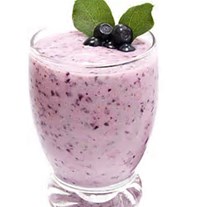
BREAKFAST SMOOTHIE

This is a recipe I posted on this blog back in 2011.  I often get requests for healthy smoothies so thought I would post this again.  This is not meant to be the beverage with a meal. I do not promote smoothies for diabetics but to each his own.


This recipe is okay for most diabetics and those watching their insulin levels because of its good protein to carbohydrate ratio.  It is high in carbs but has way over the 1/3 as many proteins as carbs diabetics should maintain. You know your body and how this might work or not for you.

1 cup fat-free milk*
6-oz fat-free plain yogurt**
2 tbsp walnuts
2 tbsp flaxseed meal
1/2 cup blueberries
dash of ground cinnamon

Pour milk into a blender container; add the yogurt, walnuts, flaxseed meal, and blueberries.  Sprinkle ground cinnamon over top.  Blend for 15 to 20 seconds until smooth.

*May substitute equal amount of low-fat calcium enriched soy milk.
**For diabetics it is best to use plain Greek yogurt. Note that will change the nutritional numbers.

Yield: 1 serving
384 calories, 22 g protein, 45 grams carbs, 6 g fiber, 16 g (1 saturated) fat, 7 mg cholesterol, 232 mg sodium

If low on potassium, use a banana instead of blueberries or add half a banana to the above.  Remember that changes the nutritional numbers!

Tuesday, December 24, 2024

LOW CARB DIETING

Are you on a low-carb diet or avoiding carbs in your everyday meals? Do you have trouble zipping your jeans because of belly bloat? If so you might be surprised to know that your low-carb dieting may be the culprit and here's the reason why. The National Institute of Digestive Diseases says you need carbs to keep your system operating properly. They state that one of the key symptoms of belly bloat is constipation and constipation is a common side effect of a low-carb diet. In one of their studies 68% of the participants on a low-carb diet complained of constipation. Compare that to 30% for the general non-dieting population and 35% for dieters who ate more carbs. Many blame their belly bloat on eating carbs and therefore may be causing their problem by skipping necessary carbs.

Did you know that carbs can actually shrink fat cells, especially in the belly. They can also boost fat burning and curb cravings. Over the next few days I will talk more about carbs, good carbs and bad carbs and how each can effect your body. You might be surprised!

Note: File Photo
PS - How many whole grains do you see here????

Monday, November 25, 2024

HOW TO FIGURE NET CARBS

Total carbs include fiber. To figure net carbs subtract the dietary fiber count and the sugar alcohols from the total carbs.

file photo


Thursday, October 31, 2024

DON'T THINK OF FOODS/CALORIES AS JUST CARBS, PROTEINS OR FATS


Try thinking of foods as packages of various amounts of carbs, protein, and fats. A food and its calories may be made up of any one or any combination of the three. If you are diabetic or watching carbs for other health reasons here is a simple way to think of carbs. The calories in the following foods come mainly from carbs:

  • Sweets and desserts such as candy, cakes, pies, cookies
  • Starches such as breads, grains, cereals
  • Fruits and their juices whether raw, fresh, or canned
  • Vegetables including broccoli, corn, beans, peas, peppers, etc
  • Fat-free foods often use carbohydrate-based fat replacers ie sour cream, salad dressings
  • Sugar-free foods using polyols or sugar alcohols (you will notice sugar-free foods usually note they are not a low-calorie food)
A healthy diet always includes a variety of foods.

file photo

Monday, July 15, 2024

CARBS AND GLUCOSE LEVELS

We know the carbs in foods contribute the most to a rise in glucose levels after eating. Knowing that, we assume to lower our glucose levels we cut carbs. A nasty little fact is research, and research shows that lowering glucose is not as simple as cutting carbs. If you have glucose through the actions of the pancreas, medications, or a shot you should be able to control your glucose level after eating.

Many studies have been conducted on both type 1 and type 2 diabetics over the years. According to Madelyn Wheeler, RD, "A lot depends on other components of the diet; healthy or not-so-healthy fat, and whether or not people lose weight while on an eating plan." Lowering carbs can be a good thing and eliminating some unhealthy carbs is a very good thing but that is part of an overall plan to lower glucose levels. 

Sunday, July 14, 2024

CONFUSED ABOUT CARBS?

If you are confused about carbs, you are not alone. Arguments regarding carbs are almost as contentious as arguments about politics. If you are one who thinks we Americans are gorging on carbs, sorry, but you are wrong. For many years now the percentage number of calories from carbs in the American diet has remained at around 50%. That information is from Joanne Slavin, Ph.D., RD. a food science and nutrition professor. She stated that studies have shown that people who get half or more of their calories from carbs are at healthier body weights. 

According to the Mayo Clinic the dietary guideline for Americans recommends that carbs make up 45% - 65% of one's total daily calories. That means for a 2,000 calorie a day diet, for example, 900 to 1,300 calories should come from carbs. That comes to 225 and 325 grams of carbs. Surprised? That doesn't mean rushing to the nearest doughnut shop and loading up on sweets. There are different types of carbs and doughnuts, and candy are not on the 'good carbs' list.

"Carbohydrates: Your Body's Most Important Source of Fuel" from Everyday Health.

More on carbs on the next post.

Thursday, June 27, 2024

ARE FODMAPs IN ALL CARBS?

The answer to our title question is no! It is important to know that all FODMAPs are carbs but not all carbs contain FODMAPs. Basically FODMAPs fall into four categories: 

OLIGOSACCHARIDES - Found in such common foods as wheat, rye, okra, watermelon, pasta, onions and garlic. That is a partial list.

GALECTO-OLIGOSACCHARIDES - Found in such common foods as lentils, pinto beans, kidney beans, peas. Again, this is a partial list.

DISACCHARIDES (lactose) - Found in the milk of cows, sheep, and goats, soft cheeses ( cottage and ricotta), sour cream. Again, a partial list.

POLYOYS - Found in Xylitol, sorbitol, isomalt, apples, celery, peaches, pears, avocados, blackberries, cauliflower. Again, a partial list.

The above foods are partial lists listed to show you how common the foods containing FODMAPS are. Everyone is different. There may be one food or several that can trigger abdominal distress in a person. If you suffer from abdominal distress you may want to try eliminating certain foods to see if that eases your symptoms. If you are under a doctor's care for your symptoms, I suggest you work with them or at least discuss with them.

file photo

Wednesday, May 29, 2024

INFORMATION ON BANANAS FOR DIABETICS

There is always confusion about whether or not diabetics can eat bananas. Personally, I eat them often and cook/bake with them all the time and I never have a blood sugar problem from them (yes, I am diabetic). I do, however, eat them just barely ripe and I only eat a small to medium one. I make banana bread but add cinnamon and nuts, both blood sugar stabilizers. I also make banana pudding using Splenda and I use the just barely ripe bananas in it.  Here are some facts from Amy Reeder, registered dietitian, about bananas.

  • Bananas are a healthy way to get nutrients such as potassium, vitamin C, and fiber.
  • Bananas do contain carbohydrates.
  • Bananas are sodium-free, cholesterol-free, and fat-free.
  • Counting the carbs in a banana is tricky because it depends on the size and the ripeness of each banana. This chart will help you figure the carb grams in bananas based on size:
6 inches or less: 18.5 grams
6-7 inches: 23 grams
7-8 inches: 27 grams
8-9 inches: 31 grams
9 inches or larger: 35 grams
  • If a medium banana has 31 g carbs this would be the breakdown: 19 g would be sugar, 11 would be starch and that includes 3 g of fiber.
  • Bananas are considered low glycemic index foods. A medium banana has a glycemic index of 51(anything under 55 is low glycemic). But as with carb grams, glycemic index numbers change with the banana depending on its ripeness. Check the chart that follows:
Medium fully ripe = 51 gi
Medium under ripe (still some green on peel) = 42 gi
Medium over-ripe (some brown spots starting to appear on peel) = 48 gi
  • Plantains are members of the banana family. Plantains fall into the green banana category and are eaten cooked, usually fried.
  • Note: Be cautious of dried banana chips as they usually have a higher sugar and fat content due to preparation. Read labels carefully and it you eat them, eat them with nuts.

Wednesday, April 17, 2024

EATING TO CONTROL STRESS - PART 4

Continuing my posts on 'Eating to Control Stress' we get into another category of foods and that is whole-grains. Yes, whole-grain cereals such as oatmeal, whole-grain breads and pasta can help you reduce stress. Dr. Judith J. Wurtman, co-author of The Serotonin Power Diet has stated that serotonin can only be made when we have certain building blocks in our bloodstream. In order for tryptophan, vitamin B and omega-3 fatty acids to assist in the production of serotonin, you need carbohydrates. Carbs slow down the digestion process, giving the body time to release that feel-good chemical known as serotonin. Note: Be sure you are choosy healthy whole-grain carbs to avoid that big stressor - weight gain!

file photo

Wednesday, April 3, 2024

EXCHANGE TRADITIONAL FUDGE FOR A SQUARE OF DARK CHOCOLATE

Traditional fudge is a huge dose of sugar! If you exchange a piece of fudge for a square of dark chocolate that is at least 70% cocoa, you can save about 8 grams of carbs per ounce. Cut back on carbs, cut back on sugar and calories!


Monday, April 1, 2024

EAT MORE NON-STARCHY VEGETABLES

Fill your plate with non-starchy veggies like green beans, broccoli, kale and spinach. Not only are these foods low in carbs, but they’re high in fiber to boot. This means they'll keep you full for longer than their starchy counterparts — potatoes, peas and corn. This is especially important advice for diabetics.

file photo